Women in Islam: The Dignity, Rights, and Protections Allah Has Given Them
Honor, rights, mercy, responsibility, and a truthful answer to difficult questions
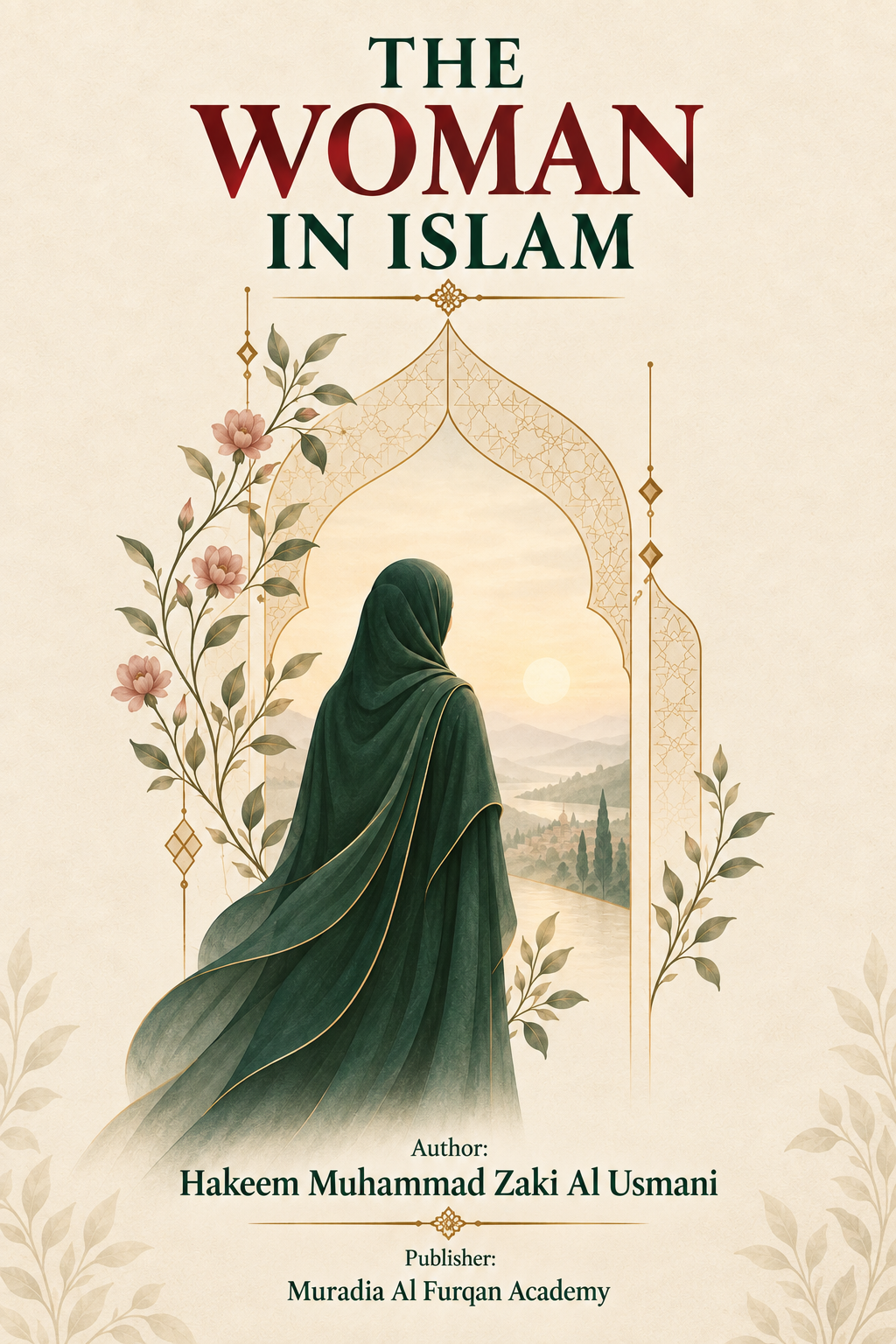
Is she only someone’s daughter, someone’s wife, or someone’s mother?
No. Islam begins with something even more fundamental: a woman is a servant of Allah and a complete human being in her own right. She has her own faith, mind, will, and property. She is accountable for her own choices. Her humanity does not come from her relationship to a man. Allah created her with dignity from the beginning.
When the Quran speaks about faith, goodness, and reward, it addresses women and men together:
إِنَّ الْمُسْلِمِينَ وَالْمُسْلِمَاتِ وَالْمُؤْمِنِينَ وَالْمُؤْمِنَاتِ... أَعَدَّ اللَّهُ لَهُمْ مَغْفِرَةً وَأَجْرًا عَظِيمًا
Surely the Muslim men and Muslim women, the believing men and believing women … Allah has prepared forgiveness and a great reward for all of them.
(Quran 33:35)
This does not mean that women and men are identical in their bodies or in every responsibility of life. Islam gives both the same essential human dignity, the same opportunity for spiritual excellence, and the same accountability before Allah. At the same time, it assigns some responsibilities differently.
In some matters, men carry a heavier obligation. In others, women receive a particular right or ease. A difference is not automatically an injustice. Sometimes treating two situations differently is exactly what fairness requires.
This essay is not an attempt to declare every man guilty or every woman innocent in every circumstance. Its purpose is to help women recognize their rights and men understand their responsibilities. It also avoids grand claims that cannot be supported by sound religious evidence. Islam does not need exaggeration to appear beautiful. The truth is already beautiful enough.
A Daughter Is Not a Source of Shame
Before Islam, many Arabs treated the birth of a daughter as a disgrace. Some hard-hearted people even buried infant girls alive. The Quran did more than prohibit that cruelty. It preserved the little girl’s case for the Day of Judgment:
وَإِذَا الْمَوْءُودَةُ سُئِلَتْ بِأَيِّ ذَنْبٍ قُتِلَتْ
And when the girl who was buried alive is asked for what sin she was killed.
(Quran 81:8–9)
Notice the power of these words. The question will be put to the child, but the killer will be the one forced to answer. This is how precious the life of that wronged girl is to Allah.
The Prophet Muhammad ﷺ taught that raising daughters with kindness can be a path to Paradise. The very daughters whom society considered burdens were described as a shield from the Fire for those who cared for them well. Loving a daughter, educating her, listening to her, and protecting her dignity are not small acts of goodness.
A daughter does not deserve respect only while she is little and easy to please. Her dignity remains when she grows up, develops her own views, and expresses her wishes about marriage. Giving a daughter less food, education, medical care, attention, or affection than a son is not Islamic justice.
Nor does a woman’s worth depend on whether she marries. An unmarried, divorced, widowed, or childless woman possesses full human dignity. Marriage can be a profound blessing, but it is not a requirement for being a complete person. A woman’s true worth rests in faith, God-consciousness, knowledge, character, and good deeds.
Her Mind, Her Consent, and Her Property
Islam does not treat a woman as a person without agency whose every decision must be made by someone else. She may own property, buy and sell, give gifts, appoint an agent, and spend her lawful wealth as she chooses. Her property does not become the property of her husband, father, or brother.
If she earns an income, that lawful income belongs to her. Her husband may not take her salary or savings without her willing consent. The same principle of honesty applies to her: she may not wrongfully take her husband’s property either. Islam teaches both spouses trustworthiness and justice.
A woman also has the right to learn her religion and acquire the worldly knowledge she needs. The women among the Companions asked the Prophet ﷺ questions. They even requested time set aside specifically for them so they could learn, and he gave it to them. A woman asking questions is not disrespectful. Learning is a genuine need.
It is therefore wrong to keep a woman uneducated on the grounds that she only needs to manage a home. Managing a home, raising children, practicing faith, and making sound decisions all require knowledge. Education should be pursued in a safe and morally responsible way, but its door should not be closed to her.
Marriage Is a Covenant, Not a Purchase
Marriage in Islam is not the purchase of a woman. The mahr is not her price, and her husband does not own her. Marriage is a solemn covenant in which two people accept rights and responsibilities toward one another.
The woman’s genuine consent is essential to that covenant. Parents have the right—and often the wisdom—to advise her, help identify a suitable match, and protect her from harm. But they are not owners of an adult woman’s life. A “yes” extracted through fear, threats, violence, emotional blackmail, or warnings about disgracing the family is not meaningful consent.
A hadith says that a virgin’s silence may indicate her permission. This does not mean that a terrified young woman can remain silent while her family marries her to someone against her will.
The hadith refers to a woman who may be too shy to say “yes” openly but is entirely free to say “no.” Where refusal brings punishment, threats, rejection, or fear, silence cannot honestly be called consent. To treat it that way would defeat the very purpose of the hadith.
When women complained to the Prophet ﷺ that they had been married against their wishes, he listened and gave them a choice. A woman’s voice matters both before marriage and after it.
The Quran describes the purpose of marriage in simple and beautiful words:
لِتَسْكُنُوا إِلَيْهَا وَجَعَلَ بَيْنَكُمْ مَوَدَّةً وَرَحْمَةً
So that you may find tranquility with one another, and He has placed love and mercy between you.
(Quran 30:21)
A Muslim home should therefore offer peace, not fear; affection, not humiliation; mercy, not cruelty.
The Quran also calls spouses garments for one another. Clothing is close to a person. It covers, protects, comforts, and beautifies. A husband and wife should likewise cover one another’s faults, protect one another’s dignity, and provide support in times of weakness.
Qawwamah Means Responsibility, Not Absolute Rule
The Quran describes the man as the family’s qawwam. The term can sound difficult, but its basic meaning is the person charged with maintaining the household: providing financial support, offering protection, carrying responsibility for the family’s welfare, and answering for how that trust is handled.
It does not mean that a husband may do whatever he wants while his wife simply follows orders. Her reason and judgment matter. The man who is given responsibility is also required to provide food, clothing, housing, and essential expenses. Authority is inseparable from accountability.
A good husband consults his wife. He listens carefully. If her judgment is better, accepting it does not diminish him. A home is not a military base where every conversation ends with a command. A healthy family runs through affection, wisdom, and consultation.
A wife is required to honor her husband’s lawful marital rights and cooperate with him in what is good. Scholars call this obedience in what is right—not obedience to sin, injustice, unlawful isolation from family, or actions that cause real harm.
A well-known hadith gives glad tidings of Paradise to a woman who guards her prayers, fasts Ramadan, protects her chastity, and fulfills her husband’s lawful rights. This is a great virtue. It is not a license for a husband to oppress her. The same religion commands him:
وَعَاشِرُوهُنَّ بِالْمَعْرُوفِ
Live with them honorably and treat them well.
(Quran 4:19)
The Prophet ﷺ said that the best among his community are those who are best to their families. A man who smiles at everyone outside the home but fills his own home with insults, threats, and fear is not practicing the character of the Prophet.
Mahr Is Her Right, Not a Favor
The mahr is money, gold, property, or another lawful benefit that becomes the wife’s right through marriage. It is not a purchase price. It is a financial right granted to her by Allah.
The mahr belongs to the woman herself. Her parents, brothers, and husband have no right to take it without her permission. She may willingly waive part of it, but pressuring her into “forgiving” it is not acceptable.
In some communities, an unrealistically large mahr is written into the marriage contract simply for show, even though no one intends to pay it. That is also wrong. The mahr should be clear and reasonable, and the husband should regard it as a real debt and responsibility.
Islam also makes the wife’s nafaqah, or financial maintenance, the husband’s duty. In simple terms, this includes food, clothing, housing, and basic needs according to the couple’s circumstances and his means. Even if the wife is wealthy, her basic maintenance remains the husband’s responsibility. If she freely contributes to the household, that is generosity on her part; it cannot be forced from her.
The Prophet ﷺ taught that spending on one’s family for the sake of Allah counts as charity. A man who earns lawfully to support his wife and children is not merely earning a living. With the right intention, his work becomes an act of worship.
A Woman Does Not Always Inherit Half of a Man’s Share
In a number of societies before Islam, women were denied inheritance altogether. At times, a widow herself was treated like an object among the property the deceased had left behind. The Quran ended that injustice and explicitly established shares for women as well as men.
Islamic inheritance is often reduced to one sentence: “A woman receives half of what a man receives.” That is not true in every case. In certain arrangements, a son receives twice the share of a daughter. But the entire inheritance system does not follow that single formula. Depending on the family structure, a woman may receive less than a man, the same as a man, more than a man, or inherit in a case where no comparable male relative inherits.
For example, when the deceased leaves a son, the mother and father each receive one-sixth. In that case, a woman and a man receive equal shares. Inheritance is calculated according to several factors, including closeness of relationship, which heirs are present, and the financial duties attached to them—not gender alone.
Where a son receives more than a daughter, the daughter’s share remains entirely hers. The son, meanwhile, may be responsible for a wife’s mahr, the maintenance of his wife and children, and other financial obligations. Looking only at the amount received ignores the larger financial picture.
Most importantly, a larger or smaller inheritance share is not a measure of a person’s worth before Allah. If money determined human value, a righteous person with little wealth could never be honored. In the sight of Allah, true distinction comes through taqwa—faithful awareness of Him and righteous conduct.
Divorce Does Not Erase Her Rights
Islam encourages reconciliation and the preservation of marriage. But when life together becomes a pattern of cruelty and harm, it does not seal every door to separation. Not every marriage that ends is a moral failure. At times, a dignified separation is better than continuing in violence, hatred, and sin.
After divorce, a woman observes iddah, a defined waiting period before entering a new marriage. Among its religious and family purposes are clarifying whether there is a pregnancy and, in certain forms of divorce, preserving an opportunity for reconciliation.
The rules concerning housing and financial support vary according to the kind of divorce and the woman’s circumstances. The Quran nevertheless lays down important protections: a woman must not be expelled merely to hurt or pressure her; a divorced pregnant woman must be supported until delivery; and compensation should be agreed upon if she nurses the child. The Quran also teaches spouses to part with decency rather than spite.
A woman may seek khula, a recognized path to end the marriage. Depending on the circumstances, this may involve returning the mahr or reaching another mutually accepted arrangement.
Where there is abuse, failure to provide maintenance, prolonged disappearance, or the destruction of basic marital rights, she may also seek faskh, a judicial dissolution of the marriage through a qualified judge or court. The details depend on the case, but it is simply false to claim that Islam leaves a woman with no way out of oppression.
Menstruation and Postpartum Bleeding Are Not Sins
Menstruation and postpartum bleeding are natural conditions of the female body, not moral failures. During these days, the obligation of ritual prayer is lifted, and those prayers do not have to be made up later. Any Ramadan fasts missed for this reason are made up afterward.
This concession does not mean that a woman has become spiritually inferior or distant from Allah. During menstruation, refraining from prayer is itself obedience to His command. On ordinary days, praying is worship; during menstruation, not praying is also obedience, because both responses follow what Allah has prescribed.
A menstruating woman is not someone whom others are forbidden to touch, sit beside, or eat with. The Prophet’s affectionate and normal interaction with his wives during menstruation is well established. Only the specific acts of worship addressed by Islamic law are suspended.
Prayer, the Mosque, Jihad, and Hajj
Women are not required to attend the Friday prayer or the daily congregational prayers at the mosque. That exemption does not mean they are prohibited from going. The Prophet ﷺ specifically told men not to prevent the female servants of Allah from attending the mosque. The ability to pray at home is an ease, not a sign of lower spiritual rank.
Under normal circumstances, women are not assigned the obligation of combat. An immediate attack that makes personal or communal defense necessary is a separate emergency situation.
When Aishah (may Allah be pleased with her) asked about jihad, the Prophet ﷺ described Hajj as the finest jihad for women. During Hajj, a woman does not wear the two specific unstitched garments prescribed for men. She wears ordinary, modest clothing. While in ihram she does not wear a fitted face veil or gloves; when unrelated men are present, she may lower an outer cloth over her face.
At the end of Hajj or Umrah, a woman does not shave her head. She trims a small amount from the ends of her hair. If menstruation begins during Hajj, she may perform the other rites and delay tawaf until she is ritually pure.
Within the general limits of Islamic modesty, women are also permitted to wear gold jewelry and silk, while the ruling on pure gold and silk is different for men. This is a permission for adornment, though ostentation, arrogance, and wastefulness remain wrong for both women and men.
The hadith literature also promises the reward of martyrdom to a woman who dies because of pregnancy or childbirth. The world may never fully appreciate her suffering, but Allah knows every moment of it and preserves her reward.
The Mother Comes First in Loving Service
A Companion asked the Prophet ﷺ, “Who is most entitled to my good companionship?” He answered, “Your mother.” The man asked again, and the Prophet again said, “Your mother.” A third time, he gave the same answer. Only then did he say, “Your father.”
This hadith does not erase a father’s rights. It does, however, recognize the extraordinary burden of pregnancy, birth, nursing, sleepless nights, and years of care by giving the mother a special claim to loving service.
Serving one’s mother means more than giving her money. It includes speaking gently, making time for her, noticing her loneliness, caring for her when she is ill, and not becoming irritated when age causes her to repeat herself.
A mother is still human and can make mistakes. If she commands something sinful or unjust, that instruction should not be followed. Even then, disagreement should be expressed with dignity and kindness. Islam keeps truth and good manners together.
Hijab Is Part of a Larger Moral System
When hijab is discussed, the entire burden is often placed on women. The Quran, however, first commands believing men to lower their gaze and guard their chastity. It then gives women their instructions concerning modesty.
Hijab is larger than a single piece of cloth. It includes clothing, the gaze, speech, conduct, and appropriate boundaries between women and men. Modest dress is a command for women, but controlling the eyes, tongue, and intentions is a command for men.
If a woman falls short in her observance of hijab, she is accountable to Allah for her own actions. Her shortcomings do not give a man permission to stare at her, harass her, speak obscenely to her, or assault her. The harasser is responsible for his own wrongdoing. Silencing a victim by saying that her clothing was imperfect is an attempt to hide one person’s crime behind an unrelated religious failing.
Islam protects a woman’s dignity in ways that extend beyond clothing. The Quran prescribes a serious penalty for falsely accusing a chaste woman of adultery. It also condemns spying, baseless suspicion, and the exposure of private marital details. Spouses are guardians of each other’s vulnerabilities, not storytellers who trade private secrets in public.
One distinction is essential: concealing a personal fault is not the same as concealing abuse. A woman who is being harmed may seek help from her parents, trustworthy relatives, a qualified religious scholar, a counselor, the police, or the courts. Reporting injustice for the purpose of ending it and obtaining one’s rights is not sinful gossip or immodesty.
A Home May Be Her Center, but It Is Not Her Prison
Islam places great value on the home and family, and women often play an irreplaceable role in building both. That does not mean the doors must be locked against her or that she may be denied education, medical care, worship, or other legitimate needs.
During the Prophet’s lifetime, women attended the mosque, asked religious questions, cared for the wounded, bought and sold goods, and went out to meet their needs. Living with a strong connection to one’s home is not the same as being confined inside it.
A woman may leave for lawful education, medical treatment, visits with her parents, necessary shopping, religious or community service, and permissible work conducted within Islamic boundaries. Families differ, so a husband and wife should reach arrangements through consultation while considering faith, safety, their children, and the rights of both spouses.
Men are required to provide so that a woman is not forced to earn in every circumstance simply to secure her basic needs. Turning that duty of provision into an excuse to imprison her reverses the purpose of the command.
Physical, Verbal, and Emotional Harm Are All Real
One of the great legal and moral principles of Islam is:
لَا ضَرَرَ وَلَا ضِرَارَ
Harm must neither be inflicted nor returned with harm.
A husband is forbidden to strike his wife’s face, curse her, degrade her appearance, or humiliate her. The face holds a special place in a person’s identity and dignity. Yet bodily injury is not the only form of abuse. Repeated insults, threats, public ridicule, isolation from her family, financial control, and keeping her in constant fear can also cause profound harm.
Abuse does not become harmless simply because it leaves no bruise. Persistent fear can damage sleep, emotional stability, self-respect, physical health, and a person’s ability to feel safe. It also affects children. The World Health Organization identifies psychological abuse and controlling behavior as forms of intimate-partner violence and notes serious effects on women’s health and children’s well-being.
Islam does not only prohibit a man from abusing a woman. A woman may not hit her husband, insult him, make knowingly false accusations, or destroy his reputation. Wrongdoing is judged by the act, not excused by the sex of the person committing it. Where one spouse has greater physical, social, or financial power, however, the responsibility not to misuse that power is even greater.
Rape: The Guilt Belongs to the Offender, Not the Victim
Rape and forced sexual assault are grave injustices in Islam. Their guilt can never be transferred to the woman who was attacked. What she was wearing, where she went, or whether she already knew the assailant does not make coercion lawful.
It is also inaccurate to say that every report of rape can be considered only if four eyewitnesses saw the assault. The well-known requirement of four witnesses belongs to the specific legal discussion of establishing the fixed Quranic punishment for consensual adultery.
An investigation of coercion and sexual assault may consider a victim’s account, a confession, medical evidence, physical injuries, DNA, video, messages, witness testimony, and other reliable evidence. Which evidence establishes which offense and penalty is a question for qualified judges and the governing law.
Popular lists sometimes claim, without qualification, that “whoever rapes a woman is put to death.” That is not a rule that can be stated for every case. Islamic law treats the crime with the utmost severity, and certain aggravated forms may carry the death penalty. But the sentence depends on the nature of the crime, admissible evidence, and a lawful judicial decision. Neither an individual nor a crowd may hear an allegation and carry out punishment on its own.
The Prophet ﷺ promised the reward of martyrdom to a person killed while defending life, family, or honor. That teaching can never justify murdering a woman, beating her, or overriding her will in the name of “family honor.” An honor killing is not honor. It is oppression and murder.
The Hardest Question: Does Islam Allow a Husband to Hit His Wife?
This question must be answered directly. Quran 4:34 contains the word وَاضْرِبُوهُنَّ (wa-dribuhunna). Hiding the word makes readers feel that part of the text is being concealed. Yet translating it only as “beat them,” without the verse’s context, legal restrictions, and the Prophet’s own conduct, is also seriously incomplete.
The issue becomes clearer when we take its parts one at a time.
1. The Verse Is Not About Everyday Disagreement
The verse addresses nushuz, a technical term in Islamic family law. It does not mean every disagreement, mistake, or act of independence. It refers to a serious and persistent marital breach that threatens the basic integrity of the marriage.
A wife expressing an opinion is not nushuz. Disagreeing with something her husband says when he is wrong is not nushuz. Failing to perform every service desired by her in-laws is not nushuz. A late meal, an untidy room, fatigue, illness, or ordinary anger cannot become an excuse to invoke this verse.
The Quran does not use the word only for women. Quran 4:128 also speaks of a husband’s nushuz or withdrawal from his wife. A man, too, can violate the fundamental rights of marriage. The word therefore concerns a grave breakdown of marital duties, not a woman’s possession of her own voice.
2. The Quran Does Not Tell a Man to Reach for Violence First
The verse identifies a progression of responses. It first mentions counsel and serious conversation, then separation in bed, and only afterward uses the word daraba. The next verse instructs the families to appoint a wise representative from each side to work toward reconciliation.
This sequence shows that the purpose is not to vent anger or punish a wife. It is an attempt to stop a marriage from collapsing. A husband is not given permission to raise his hand simply because he hears something he dislikes.
3. Muslim Jurists Did Not Treat This as Permission for Abuse
Classical jurists placed severe restrictions on the last response mentioned in the verse. They said it could not be violent, leave an injury or mark, target the face or any vulnerable area, express revenge, or be used where it was likely to make the problem worse.
A husband is not required to use this response. It is neither an act of worship nor a mark of a good husband. Scholars have explained that where even a “light” physical act is understood as humiliation, causes physical or psychological harm, or is unlikely to bring reconciliation, the permission does not apply. Egypt’s Dar al-Ifta, for example, states that harm and humiliation are impermissible, that the measure is not obligatory, and that noble men refrain from it.
4. The Prophet ﷺ Never Hit Any of His Wives
Aishah (may Allah be pleased with her) reported that the Messenger of Allah ﷺ never struck a woman or a servant with his hand. When many women came forward to complain that their husbands had beaten them, he declared that such men were not the best among the Muslim community.
He also condemned the contradiction of a man beating his wife as though she were enslaved and then expecting marital intimacy with her. Violence destroys affection, dignity, and the sense of safety on which intimacy depends.
The Prophet ﷺ possessed authority and experienced the strains and disagreements that occur in family life, yet he never hit a wife. A Muslim cannot ask for a better model than his.
5. What If Even a “Light Strike” Is Deeply Humiliating?
This is the central modern objection, and it is reasonable to face it honestly. If a supposedly light action leaves a woman feeling degraded, afraid, emotionally shattered, or unable to trust her husband, why should anyone use it?
The straightforward answer is: he should not.
An act that produces humiliation, fear, bodily pain, or psychological distress is no longer the harmless symbolic measure described under strict juristic conditions. Saying “I barely touched her” does not settle the matter. Harm is not limited to blood or bruises. The loss of trust and safety is also harm.
For that reason, the sound and safe practical guidance today is simple: a husband should not lay a hand on his wife. He should speak with her, take time to cool down, seek help from wise relatives, consult a qualified scholar or marriage counselor, and, if the marriage cannot be repaired, separate with dignity.
6. Why, Then, Does the Quran Mention It?
The Quran reformed real people living in a real society. When it was revealed, men’s violence against women was widespread and largely unrestricted. The verse did not create that practice. It placed a preexisting practice inside a sequence, narrowed it drastically, denied it the character of uncontrolled punishment, and followed it with family mediation.
The Prophet ﷺ then demonstrated the higher and nobler path through his own conduct: do not hit. This is why scholars have said that honorable men leave even the verse’s tightly constrained final allowance unused.
Something described as legally permissible under narrow conditions is not necessarily wise in every culture, time, or marriage. If the aim is reconciliation but a physical gesture will predictably create terror, legal proceedings, resentment, and family breakdown, leaving it aside does not oppose the Quran. It protects the very purpose for which the limits were given.
7. What Does Indian Law Say Today?
In India, the Protection of Women from Domestic Violence Act, 2005 addresses more than bodily assault. Its framework covers physical, sexual, verbal, emotional, and economic abuse and allows courts to issue appropriate orders concerning protection, residence, and monetary relief.
Sections 114 and 115 of the current Bharatiya Nyaya Sanhita define causing bodily pain, disease, or infirmity as “hurt” and address voluntarily causing hurt. A husband should therefore never assume that a blow has no legal consequence because he considers it “light.” Police and courts will assess the incident and the evidence under the law.
A complaint, a police investigation, and a judicial finding are three different stages. A complaint alone does not prove that a man is guilty. At the same time, asking for protection from genuine abuse is not “rebellion.”
Shaming a woman for making a truthful report is unjust. Knowingly making a false allegation to harm an innocent man is also sinful and unjust. Islam neither silences a victim nor treats an accusation as automatic proof. It requires fairness to both sides.
The Short Answer
Does Quran 4:34 contain the imperative wa-dribuhunna, from the verb daraba? Yes.
Does that give husbands a general right to beat their wives? Absolutely not.
May a husband strike his wife over ordinary disagreement, anger, an imperfect meal, housework, or her expressing an opinion? No.
May he cause physical or psychological harm, humiliation, fear, or injury? No.
Is he religiously required to use the final response mentioned in the verse? No.
What did the Prophet ﷺ do in his own home? He never hit a wife.
What is the responsible guidance for a husband today? Never lay a hand on your wife. Use honest conversation, time to cool down, family mediation, qualified counseling, and, when truly necessary, a dignified separation.
Rights Come With Responsibilities
Islam gives women rights without pretending that they have no responsibilities. It gives men a measure of authority without releasing them from accountability.
A husband is responsible for lawful earnings, maintenance, fidelity, kind treatment, attention to his wife’s physical and emotional needs, the upbringing of their children, and the safety of the home. A wife is responsible for chastity, trustworthiness, her husband’s lawful marital rights, and cooperation in the peace of the home and the upbringing of the children. Both are responsible for protecting one another’s dignity and privacy.
A wife is not merely a person who exists to meet her husband’s needs, and a husband is not simply a machine that supplies money. They are both human. Both become tired, make mistakes, and need affection, respect, patience, and forgiveness.
When a man invokes qawwamah to justify abuse, he is not fulfilling qawwamah; he is disfiguring it. When a woman invokes her rights to excuse contempt, betrayal, or falsehood, she is not practicing Islamic justice either. A healthy home joins rights with kindness, disagreement with respect, and authority with accountability.
Do Not Confuse Muslim Misconduct With Islam
Some Muslim families deny women their rights. They force marriages, withhold inheritance, refuse to pay mahr, or mistreat wives in the name of male authority. A woman who sees these things may understandably begin to associate religion with her pain. She needs to know that everything a Muslim does is not therefore Islamic.
But saying “Islam gave women every right” is not enough. Beautiful speeches do not solve the problem if those rights disappear inside homes, families, and religious communities. A daughter must actually receive her inheritance. A daughter-in-law must actually be treated as a human being. A wife’s mahr must actually be paid. Abuse must actually be stopped, and a woman’s legitimate complaint must actually be heard.
Nor is it necessary to claim that every other religion and every modern legal system has done nothing but turn women into commodities. Sweeping claims like that cannot be made without serious evidence. Islam’s teachings are strong enough to stand on their own. They should be presented with sound proof and embodied through honorable conduct.
Let Every Woman Recognize Her True Place
Muslim woman, your dignity is not a gift from another human being that can be withdrawn when that person becomes angry. Your Lord is the One who gave it to you.
He addressed you directly in matters of faith and virtue. He made your consent meaningful in marriage. He gave you ownership of your mahr and property, a defined share of inheritance, and the right to maintenance. He granted you ease during menstruation and postpartum bleeding, promised reward for the suffering of motherhood, and prohibited attacks on your honor.
Your value does not become smaller because a father preferred a son, a husband denied your rights, a family called you a burden, or a society refused to hear you. Human injustice does not alter Allah’s judgment of you.
Learn your rights, and learn your duties as well. Seek knowledge without arrogance. Speak clearly without becoming unjust. Enduring abuse is not worship, but calling every disagreement “abuse” is not justice either. Islam does not make you voiceless, and it does not make you answerable to no one. It teaches you to live with dignity, wisdom, and awareness that you will return to Allah.
Muslim man, a woman’s rights are not favors that you hand out. They are trusts placed upon you by Allah. Paying mahr is not generosity; it is fulfilling an obligation. Providing for your wife is not purchasing her; it is carrying a responsibility. Qawwamah does not make you her owner. It makes you responsible for protection, care, and your conduct toward her before your Lord.
Islam did not make a woman a product for the marketplace or a silent prisoner in the home. It recognizes her as an honored servant of Allah, an independent owner of property, a seeker of knowledge, a central member of the family, and a partner with men in the pursuit of goodness.
Let a woman recognize the dignity her Lord has given her. Let a man protect that dignity. And let families build homes in which no woman must lose her voice, her home, or her faith merely to ask for a right Allah has already granted.
That is a woman’s true place in Islam.
Key References
The Quran: 2:187, 2:228, 2:233, 2:241; 4:4, 4:7, 4:19, 4:34–35, 4:128; 24:4, 24:30–31; 33:35, 33:59; 49:12; 30:21; 65:6; 81:8–9.
Sahih al-Bukhari: 5136, 5138, 5237, 5971, 7257.
Sahih Muslim: 335, 995, 1419, 1437, 2328, 2631.
Sunan Abi Dawud: 567, 1067, 2142, 2146, 3111.
Jami al-Tirmidhi: 1162, 1916, 3895.
Sunan al-Nasa’i: 1846, 4094, 5148; Sunan Ibn Majah: 2340; Mishkat al-Masabih: 3254.
Al-Jassas, Ahkam al-Quran, commentary on Quran 4:34.
Ibn Kathir, Tafsir al-Quran al-Azim, commentary on Quran 4:34–35.
Egypt’s Dar al-Ifta: “Does My Husband Have the Right to Beat Me Up?”
World Health Organization: “Violence Against Women.”
Protection of Women from Domestic Violence Act, 2005 — India Code.
Bharatiya Nyaya Sanhita, 2023 — Ministry of Home Affairs.
Note: The discussion of Indian law is a general explanation, not legal advice for a particular case. Laws and procedures should be confirmed with a qualified local lawyer when an actual dispute arises.